

Forklifts are the backbone of modern logistics, warehousing, and construction operations. Whether you’re stacking pallets in a warehouse or moving steel beams on a construction site, the first question that always comes up is simple: how much weight can a forklift actually lift? The answer is not as straightforward as a single number. Forklifts come in different sizes, configurations, and power types, each designed for specific lifting requirements. In most cases, their lifting capacity ranges from a few thousand pounds to well over 100,000 pounds depending on the machine. Understanding these limits is critical not just for efficiency, but for safety as well.
Understanding Forklift Lifting Capacity
Forklift lifting capacity refers to the maximum weight a forklift can safely raise and transport under specific conditions. This number is determined by the manufacturer and is based on a carefully engineered balance between weight, stability, and structural strength. A forklift is essentially a balancing machine, where the rear counterweight prevents the machine from tipping forward when lifting heavy loads.
However, many people misunderstand what this number actually represents in real-world use. The rated capacity is not a flexible suggestion—it is a strict safety limit based on ideal conditions. Once you change those conditions, such as adding attachments or lifting at higher heights, the real capacity can drop significantly.
What “Rated Capacity” Really Means
The rated capacity is the maximum weight a forklift can lift at a standard load center, usually measured at 24 inches (600 mm) from the fork face. This is the benchmark used by manufacturers when labeling forklift specifications. For example, a forklift rated at 5,000 lbs means it can safely lift that weight only when the load is properly positioned at the correct distance.
This rating assumes perfect balance, proper tire condition, and no modifications. In real-world operations, these conditions rarely stay constant. That is why understanding rated capacity alone is not enough to operate safely.
Difference Between Rated and Actual Capacity
The actual lifting capacity is what the forklift can safely handle in real working conditions. This is often lower than the rated capacity due to external factors. For instance, if you attach clamps or extensions, the center of gravity shifts, reducing lifting ability. Similarly, lifting a load higher than normal also decreases stability.
In simple terms, rated capacity is the “theoretical maximum,” while actual capacity is the “real-world safe limit.” Many accidents occur when operators ignore this difference and assume the forklift can always lift its rated weight.
Average Forklift Weight Limits
Forklift capacities vary widely depending on their size and intended application. Most standard forklifts used in warehouses fall within a predictable range, while industrial machines can reach extreme lifting power.
On average, forklifts used in logistics environments lift between 3,000 and 5,000 pounds (1.5–2.5 tons), which is enough for most palletized goods. However, larger models can easily exceed this range.
For example, small electric forklifts may handle light inventory tasks, while heavy-duty diesel forklifts in ports or construction sites can lift tens of thousands of pounds. Some specialized machines used in steel or shipping industries can even exceed 100,000 pounds under controlled conditions.
Standard Warehouse Forklifts
Standard warehouse forklifts are the most common type found in distribution centers and factories. These machines are designed for efficiency, maneuverability, and safety in indoor environments. Their typical lifting range is between 3,000 and 6,000 pounds.
They are ideal for pallet movement, stacking goods on racks, and loading trucks. Because they prioritize balance and compact size, they are not intended for extremely heavy industrial loads. Still, they handle the majority of daily logistics work worldwide.
Heavy-Duty Industrial Forklifts
Heavy-duty forklifts are built for extreme environments such as ports, construction sites, and steel factories. These machines can lift anywhere from 10,000 to over 100,000 pounds, depending on the model.
They are much larger, heavier, and more powerful than standard forklifts. Their counterweights are massive, and their hydraulic systems are reinforced for extreme pressure. However, they are less maneuverable and are usually operated in open outdoor environments.
Heavy-duty forklifts are built for extreme environments such as ports, construction sites, and steel factories. These machines can lift anywhere from 10,000 to over 100,000 pounds, depending on the model.
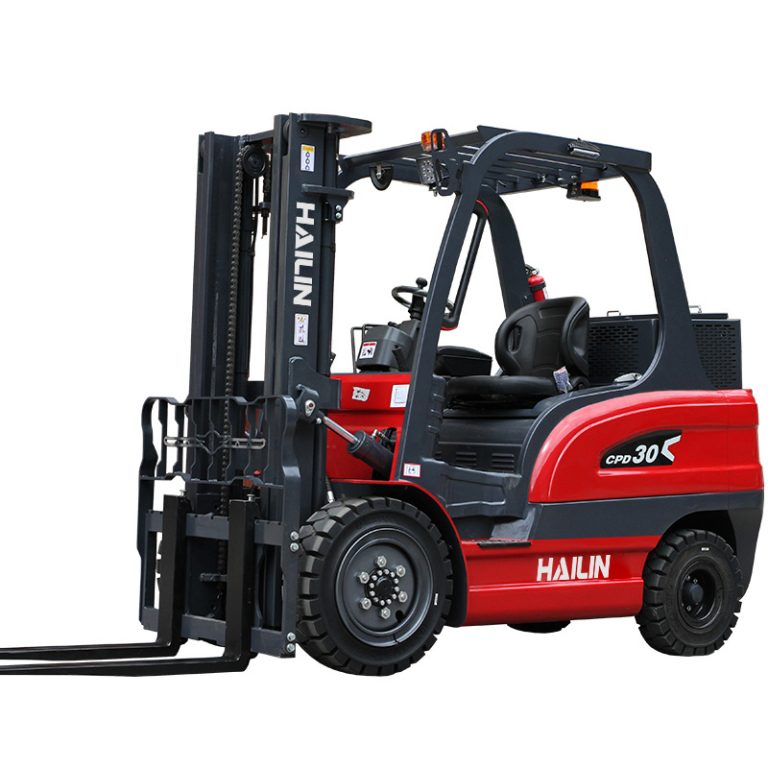
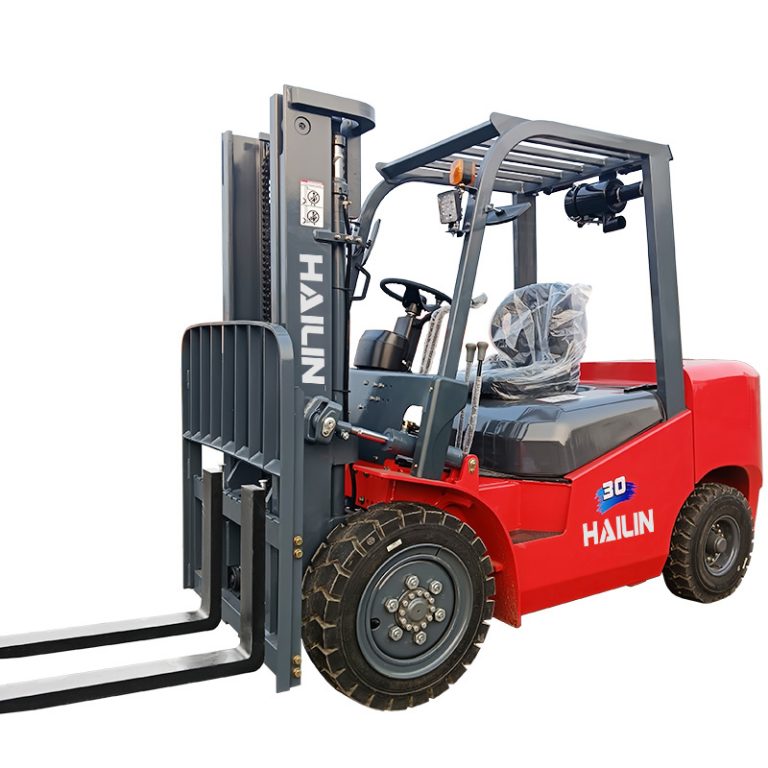
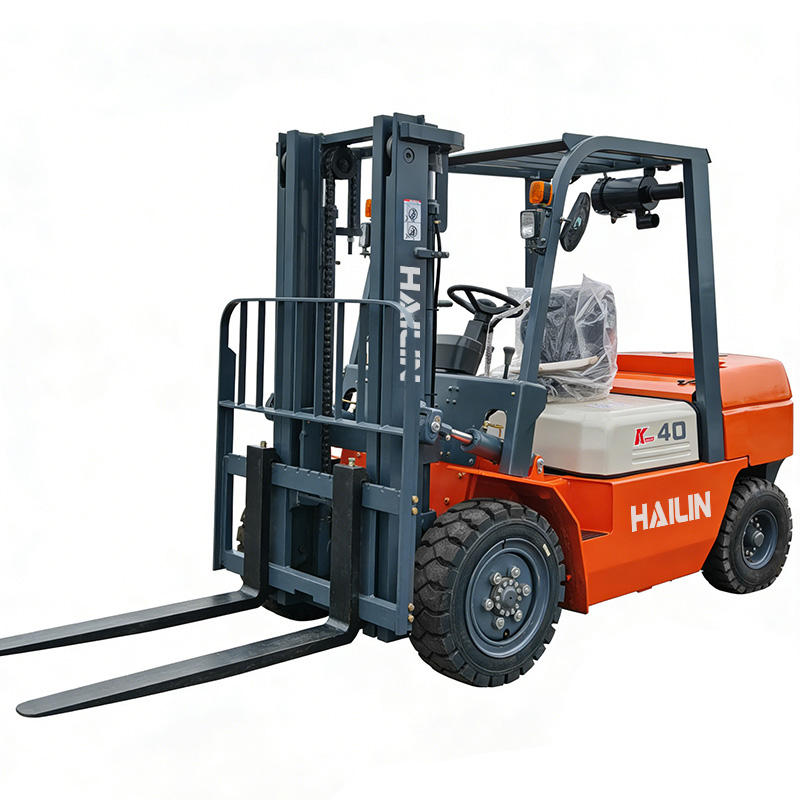
Brands like Hailin forklifts are well known in this category for producing robust diesel-powered machines designed for heavy industrial use. Hailin models are commonly used in logistics yards, mining operations, and large-scale manufacturing plants where lifting stability and engine strength are critical.
They are much larger, heavier, and more powerful than standard forklifts. Their counterweights are massive, and their hydraulic systems are reinforced for extreme pressure. However, they are less maneuverable and are usually operated in open outdoor environments.
Forklift Capacity by Type
Different forklift types are designed for different industries and workloads. Choosing the right type is essential for both productivity and safety.
Electric forklifts are commonly used in indoor warehouses due to their quiet operation and zero emissions. Diesel forklifts are preferred for outdoor heavy lifting. Rough terrain forklifts are used in construction and uneven environments.
Each type has a different lifting range, and understanding these differences helps businesses select the right equipment for their needs.
Electric Forklifts
Electric forklifts typically have a lifting capacity of 3,000 to 10,000 pounds. They are widely used in indoor logistics, retail warehouses, and manufacturing facilities. Their battery packs act as part of the counterweight system, improving stability.
They are ideal for clean environments and tight spaces. However, their capacity is generally lower compared to diesel machines of similar size.
Diesel Forklifts
Diesel forklifts are significantly more powerful, with capacities ranging from 10,000 to 30,000 pounds or more. They are commonly used in construction, shipping yards, and heavy manufacturing.
Their internal combustion engines provide stronger torque and lifting power, making them suitable for outdoor and rugged operations. However, they are noisier and produce emissions, so they are not suitable for indoor use.
Rough Terrain Forklifts
Rough terrain forklifts are built for unstable surfaces such as gravel, mud, and construction sites. They typically lift between 3,000 and 20,000 pounds, depending on the model.
These machines have large tires, strong suspension systems, and reinforced frames to handle uneven ground. Their versatility makes them essential for construction and agricultural industries.
Key Factors That Affect Forklift Capacity
Forklift capacity is not fixed. It changes depending on operating conditions, load configuration, and equipment setup. Even a slight change in load position can significantly reduce lifting ability.
Understanding these factors is essential for safe forklift operation and helps prevent accidents caused by overload or imbalance.
Load Center Distance
The load center is one of the most important factors affecting lifting capacity. It refers to the distance between the forklift’s fork face and the center of gravity of the load.
When the load center increases, the forklift becomes less stable. This reduces the safe lifting capacity. For example, a forklift rated for 5,000 pounds may only safely lift 3,500 pounds if the load is too long or unevenly distributed.
Mast Height Influence
As the mast height increases, the forklift’s stability decreases. Lifting loads higher raises the center of gravity, making tipping more likely.
This means forklifts can lift less weight when operating at maximum height. Operators must always refer to load charts provided by manufacturers to ensure safety at different lifting levels.
Safety Rules for Lifting Loads
Safety is the most important aspect of forklift operation. Overloading a forklift can lead to tipping, structural damage, or serious injury. Operators should always respect rated capacity limits and adjust for real-world conditions.
Key safety practices include keeping loads centered, avoiding sudden movements, and ensuring proper training for all operators. Regular maintenance and inspections are also critical for safe operation.
How to Read a Forklift Data Plate
Every forklift comes with a data plate that displays its maximum lifting capacity, load center, and operating limits. This plate is usually located near the operator’s seat.
Understanding this plate is essential because it provides the most accurate safety information. It shows how much weight the forklift can lift at different heights and configurations. Ignoring this information is one of the leading causes of forklift accidents.
Common Mistakes Operators Make
Many forklift accidents occur due to simple mistakes. One of the most common is assuming that all loads are equal in weight distribution. Another frequent mistake is ignoring attachments, which can significantly reduce lifting capacity.
Operators also often overlook the impact of lifting height and load positioning. These small errors can lead to dangerous instability. Proper training and awareness can prevent most of these issues.
Forklifts are powerful machines, but their lifting capacity depends on more than just a single number. While most standard forklifts lift between 3,000 and 5,000 pounds, heavy-duty models can handle tens of thousands of pounds under the right conditions. The real key to safe operation lies in understanding load centers, height limitations, and equipment configurations. When used correctly, forklifts provide safe, efficient, and reliable material handling across countless industries.
FAQs
1. What is the average forklift lifting capacity?
Most forklifts lift between 3,000 and 5,000 pounds in standard warehouse environments.
2. Can a forklift lift more than its rated capacity?
No, exceeding rated capacity is unsafe and can lead to tipping or mechanical failure.
3. What affects forklift lifting capacity the most?
Load center distance, mast height, and attachments have the biggest impact.
4. How much can heavy-duty forklifts lift?
Heavy-duty forklifts can lift between 10,000 and over 100,000 pounds.
5. Where can I find forklift capacity information?
It is displayed on the forklift’s data plate, usually located near the operator’s seat.