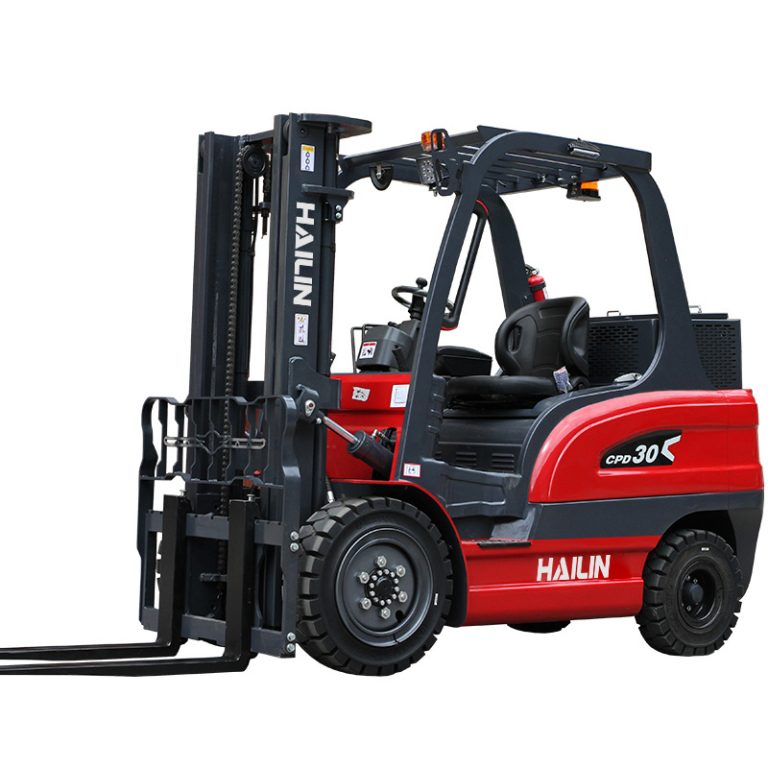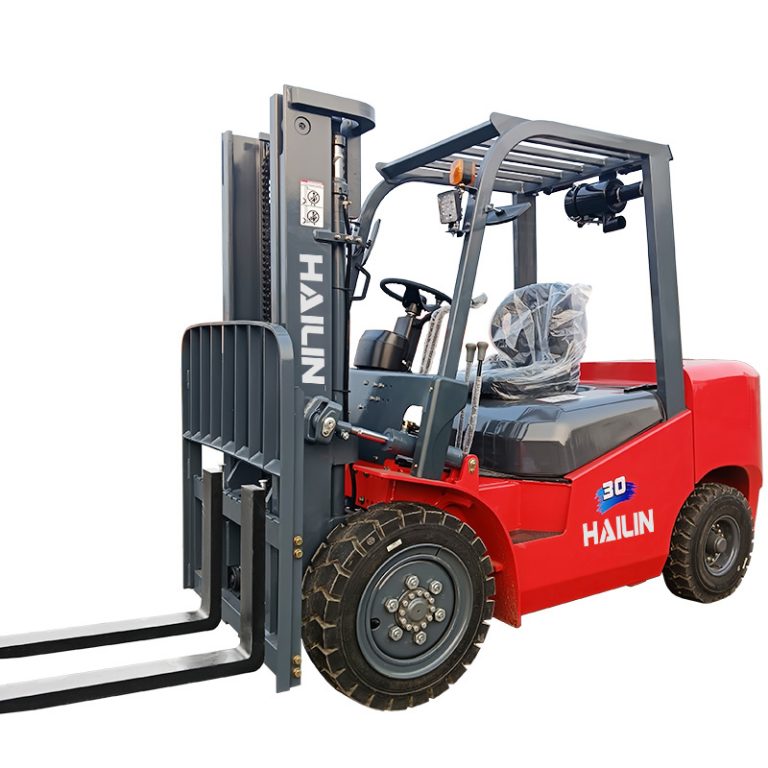


If you have ever watched a forklift lifting heavy pallets high into warehouse racks, you were actually watching the mast do most of the hard work. The mast is one of the most important components of any forklift because it controls the vertical movement of the load. Without it, a forklift would simply be a small industrial vehicle with forks attached to the front. The mast transforms the machine into a powerful material-handling tool capable of lifting, lowering, tilting, and positioning loads with precision.
According to the Occupational Safety and Health Administration (OSHA), the mast is the vertical assembly responsible for raising, lowering, and tilting forklift loads. It supports the carriage and works together with hydraulic cylinders, rollers, and chains to create smooth lifting movement. Modern warehouses, logistics centers, manufacturing plants, ports, and construction sites all depend on forklift masts to move materials safely and efficiently.
Think of the mast as the “backbone” of the forklift. Just like a human spine supports movement and balance, the mast provides the structure and strength needed for lifting operations. A weak or damaged mast can compromise stability, reduce lifting capacity, and create serious safety hazards. That is why understanding forklift masts is critical for operators, warehouse managers, and equipment buyers alike.
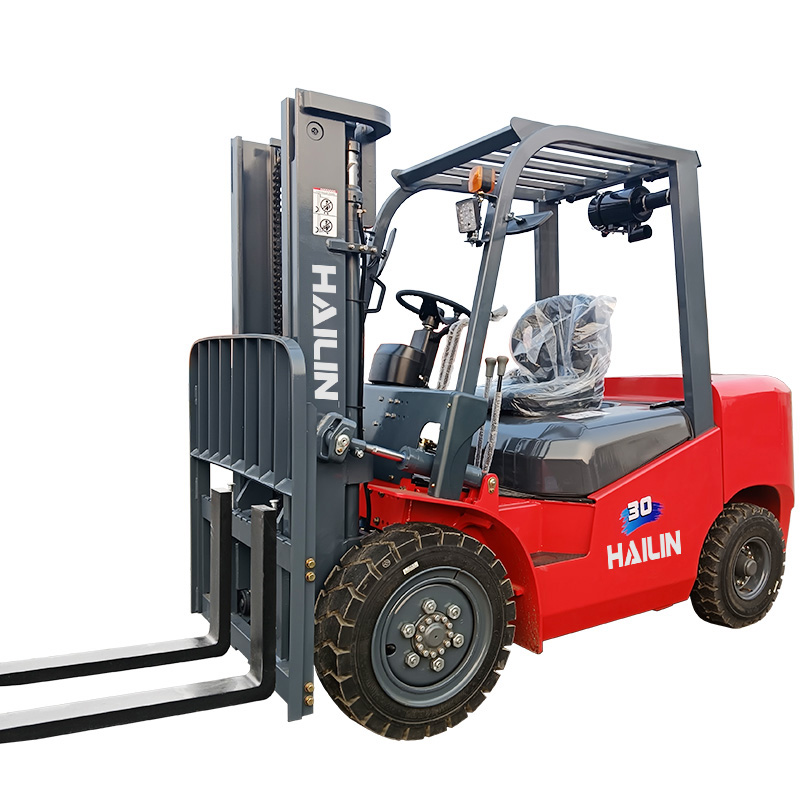
In today’s fast-moving logistics industry, choosing the correct mast type can significantly improve efficiency. Warehouses with narrow aisles and high racking systems often require specialized mast configurations that maximize lifting height while maintaining visibility and safety. Some modern forklifts even use advanced mast designs with side-mounted cylinders to improve the operator’s line of sight. Many modern brands such as HAILIN Forklift use advanced duplex and triplex mast systems to improve lifting efficiency and operator visibility in warehouses and industrial environments.
Understanding the Basic Role of a Forklift Mast
Why the Mast Is the Most Important Lifting Component
The forklift mast is far more than a metal frame standing vertically at the front of the machine. It is the core lifting mechanism that allows forklifts to handle heavy loads at different heights safely. Every time an operator lifts a pallet, stacks products onto warehouse shelves, or unloads cargo from a truck, the mast is responsible for controlling that movement with precision and balance.
OSHA explains that the mast supports the carriage, which moves vertically using hydraulic power. Hydraulic cylinders generate the lifting force, while chains and rollers guide the movement smoothly along the mast channels. Without these coordinated systems, the forklift could not safely raise or lower loads.
Imagine trying to lift a heavy object using only your arms without proper posture or support. It would be unstable, dangerous, and inefficient. The mast provides that structural support for the forklift. It distributes load weight evenly and keeps the center of gravity under control during lifting operations. This becomes especially important when handling heavy materials several meters above ground level.
The mast also directly impacts forklift performance. A poorly designed mast can limit lifting height, reduce visibility, or create instability at high elevations. On the other hand, a high-quality mast improves productivity by allowing faster, smoother, and safer material handling. This is one reason why modern forklift manufacturers invest heavily in mast engineering.
How the Mast Supports Material Handling Operations
Warehouses today operate like giant mechanical ecosystems where speed and precision matter constantly. Forklift masts make this ecosystem possible by enabling vertical storage. Instead of spreading inventory across wide floor areas, companies can stack products vertically using high warehouse racks. This dramatically increases storage efficiency and reduces operational costs.
Different industries use forklift masts differently. In construction, forklifts often transport heavy materials across rough terrain while lifting loads to elevated positions. In manufacturing, operators rely on precise mast movement to position raw materials safely near assembly lines. In logistics and distribution centers, triplex and quad masts are commonly used for high stacking operations.
The mast also influences operator comfort and visibility. Older forklift mast designs often blocked the driver’s forward view due to central hydraulic cylinders. Newer designs relocate cylinders to the sides, improving visibility and reducing accident risks. OSHA notes that mast configuration plays a major role in operational visibility and safety.
Because forklifts operate in environments filled with workers, shelving, vehicles, and expensive inventory, mast performance affects not only productivity but also workplace safety.
Main Parts of a Forklift Mast
Rails and Channels
The rails or channels are the structural framework of the mast. These vertical steel sections guide the movement of the carriage and forks during lifting and lowering operations. Depending on the mast type, there may be one, two, three, or even four stages of channels that telescope upward during operation.
Simplex masts contain a single-stage structure, while triplex and quad masts use multiple telescoping channels to achieve greater lifting heights. Each channel moves smoothly within another using rollers and bearings. This telescoping action is similar to how a telescope extends outward section by section.
The strength of these channels is critical because they must support thousands of pounds repeatedly throughout daily operations. Forklift manufacturers typically use reinforced steel construction to withstand heavy industrial use. Any bending, cracking, or warping of the channels can compromise stability and create dangerous lifting conditions.
Channel design also affects visibility. Narrower channel designs and side-mounted cylinders help operators maintain better forward sightlines. This is especially valuable in crowded warehouses where visibility is limited.
Hydraulic Cylinders
Hydraulic cylinders are essentially the muscles of the mast system. They generate the force required to lift heavy loads vertically. Hydraulic fluid pressure pushes pistons upward, causing the carriage and forks to rise.
This system allows forklifts to lift incredibly heavy materials with relatively small engine power. It is one of the reasons hydraulic technology revolutionized material handling equipment decades ago.
The hydraulic lifting principle can be visualized mathematically:
F=P×A
Where:
- F = Force generated
- P = Hydraulic pressure
- A = Cylinder piston area
This simple hydraulic relationship enables forklifts to multiply force efficiently enough to lift several tons of material.
Hydraulic cylinders also control mast tilting. Operators can tilt the mast backward for load stability or slightly forward during load placement. OSHA warns that excessive forward tilting with elevated loads increases instability and accident risk.
Chains and Rollers
Chains and rollers work together to guide smooth mast movement. Lift chains connect the hydraulic system to the carriage, transferring lifting force upward. Rollers reduce friction as channels move within each other.
Because these components operate under constant tension and heavy loads, regular inspection is essential. Worn chains can snap unexpectedly, while damaged rollers may cause jerky or uneven lifting movements.
In high-cycle warehouse environments, chains experience significant wear over time. Operators and maintenance technicians must inspect for rust, stretching, improper tension, and broken links. Ignoring these warning signs can result in costly downtime or dangerous load failures.
Carriage and Fork Attachment
The carriage is the component mounted on the mast that directly supports the forks. It travels vertically along the mast channels during lifting operations. Forks attach securely to the carriage and can often be adjusted sideways to fit different pallet widths.
Many forklifts also support specialized attachments connected to the carriage, such as clamps, rotators, or side shifters. These attachments expand forklift versatility across different industries.
The carriage must maintain proper alignment to ensure balanced load handling. Misalignment can create uneven weight distribution and increase rollover risk.
How a Forklift Mast Works
The Hydraulic Lifting Process
The forklift mast works through a carefully coordinated hydraulic system. When the operator activates the lift lever, hydraulic fluid flows into the lift cylinders under pressure. This pressure pushes the pistons upward, causing the carriage and forks to rise.
In multi-stage masts, the inner channels extend progressively as lifting height increases. This telescoping action allows forklifts to achieve impressive heights while maintaining compact dimensions when lowered.
The process may appear simple from the outside, but internally, the mast system balances hydraulic pressure, chain tension, gravity, and structural stability continuously. Every component must work together perfectly to ensure safe operation.
One fascinating aspect of forklift hydraulics is that gravity assists during lowering operations. Hydraulic systems mainly provide lifting force, while controlled fluid release allows the load to descend safely.
Mast Tilting and Stability
Mast tilting is another essential function. Operators tilt the mast backward during transport to stabilize the load against the carriage. This shifts the center of gravity closer to the forklift body, reducing tipping risk.
OSHA specifically recommends traveling with the mast tilted slightly backward for stability. Forward tilting should only occur during load placement.
Forklift stability depends heavily on maintaining a safe center of gravity. Elevated loads shift weight upward and outward, increasing rollover risk. OSHA data shows forklift overturns account for roughly 25% of forklift fatalities.
This is why operators must avoid sudden mast movements, rapid turns, or excessive forward tilt.
Different Types of Forklift Masts
Simplex Mast
A simplex mast is the most basic forklift mast configuration. It contains a single-stage channel with limited free lift capability. OSHA notes that simplex masts are commonly used where overhead clearance is restricted.
Simplex masts are ideal for:
- Loading docks
- Shipping containers
- Small warehouses
- Low-ceiling environments
Their simplicity reduces maintenance costs and improves durability. However, lifting height is limited compared to advanced mast configurations.
Duplex Mast
Duplex masts contain two-stage channels and offer greater lifting height than simplex designs. They also provide improved free lift, allowing forks to rise before the mast extends fully upward.
This makes duplex masts popular in warehouse environments where operators frequently load trucks or stack materials at moderate heights.
Compared to simplex designs, duplex masts offer:
| Feature | Simplex Mast | Duplex Mast |
|---|---|---|
| Stages | 1 | 2 |
| Lift Height | Lower | Moderate |
| Free Lift | Limited | Improved |
| Visibility | Better | Slightly Reduced |
| Common Use | Low ceilings | Warehouses |
Triplex Mast
Triplex masts are among the most widely used forklift mast types today. These three-stage masts provide excellent lifting height while maintaining relatively compact collapsed dimensions.
OSHA states that triplex masts extend further than duplex masts while maintaining similar free lift capability.
Triplex masts are especially useful in:
- High-rack warehouses
- Narrow aisle operations
- Distribution centers
- Logistics hubs
Because modern warehouses increasingly prioritize vertical storage efficiency, triplex masts have become extremely common.
Quad Mast
Quad masts use four telescoping stages to achieve maximum lifting height. These masts are designed for highly specialized operations requiring extreme vertical reach.
OSHA warns that lifting capacity decreases as mast height increases. Quad masts therefore require highly trained operators and careful load management.
They are commonly used in:
- Large distribution facilities
- Specialized industrial storage
- High-density warehouse systems
While quad masts maximize storage efficiency, they may reduce visibility and increase maintenance complexity.
Choosing the Right Forklift Mast
Indoor vs Outdoor Applications
The ideal mast depends heavily on the operating environment. Indoor warehouses often prioritize compact design, visibility, and vertical stacking efficiency. Outdoor construction sites may prioritize durability and stability instead.
Triplex masts are popular indoors because they balance height and maneuverability. Rough terrain forklifts operating outdoors may use simpler mast designs optimized for rugged conditions.
Environmental conditions also affect maintenance needs. Dust, moisture, uneven terrain, and extreme temperatures can accelerate mast wear.
Lift Height Requirements
Lift height is one of the most important considerations when selecting a forklift mast. Businesses must evaluate their highest storage racks and future expansion needs carefully.
A mast that is too short limits warehouse capacity. A mast that is unnecessarily tall may increase costs and reduce visibility.
This balancing act is similar to choosing the right ladder height for a job. Too short and you cannot reach your target. Too tall and it becomes harder to control safely.
Overhead Clearance Considerations
Collapsed mast height matters just as much as extended height. Warehouses with low ceilings, doorways, or shipping containers require compact mast designs.
Free lift capability becomes especially important in these environments. Free lift allows forks to rise without increasing mast height initially.
Operators working inside trailers or containers often rely on high free-lift masts for efficient loading operations.
Common Forklift Mast Problems
Chain Wear and Damage
Chains experience constant stress during daily operations. Over time, they may stretch, corrode, or crack. Damaged chains compromise lifting safety and should be replaced immediately.
Regular lubrication and inspection help extend chain life significantly.
Hydraulic Leaks
Hydraulic leaks reduce lifting performance and create safety hazards. Common leak sources include damaged hoses, worn seals, or cracked cylinders.
A forklift with hydraulic problems may lift slowly, drift downward unexpectedly, or fail to maintain load position properly.
Visibility Issues
Poor mast visibility contributes to workplace accidents. OSHA emphasizes that obstructed vision increases operational risk.
Operators should:
- Travel in reverse when loads block forward view
- Use spotters when necessary
- Maintain clean mast components
- Avoid overloaded forks
Forklift operators frequently mention visibility challenges in tight warehouse spaces. Many operators emphasize the importance of modern high-visibility mast designs for reducing accidents.
Forklift Mast Safety Tips
Forklift mast safety is not optional. OSHA estimates forklift-related incidents cause tens of thousands of injuries annually. Many of these incidents involve improper mast use, unstable loads, or visibility problems.
Here are some essential mast safety practices:
| Safety Tip | Why It Matters |
|---|---|
| Keep loads low during travel | Improves stability |
| Tilt mast backward while moving | Prevents load shifting |
| Never overload the forklift | Reduces rollover risk |
| Inspect chains daily | Prevents mechanical failure |
| Avoid sudden mast movements | Maintains load balance |
| Ensure adequate overhead clearance | Prevents collisions |
Operators should also understand that elevated loads dramatically change forklift stability. A raised mast shifts the center of gravity upward, making overturns more likely during sharp turns or sudden stops.
Real-world discussions from safety professionals consistently highlight training deficiencies as a major contributor to forklift incidents. Proper training helps operators understand how mast movement affects balance, visibility, and load stability.
The mast of a forklift is the heart of the machine’s lifting system. It raises, lowers, and positions loads safely while supporting warehouse efficiency and industrial productivity. From simplex to quad configurations, different mast types are designed for different applications, environments, and lifting heights.
Understanding forklift masts is essential for anyone involved in material handling. The right mast improves productivity, maximizes storage capacity, enhances operator visibility, and reduces accident risk. At the same time, proper maintenance and operator training remain critical for safe performance.
Modern forklifts continue evolving with advanced mast technologies that prioritize visibility, lifting precision, and operational efficiency. As warehouses become taller and logistics operations become faster, the forklift mast will remain one of the most important innovations in industrial equipment.
FAQs
1. What does the mast on a forklift do?
The mast is the vertical lifting assembly that raises, lowers, and tilts forklift loads using hydraulic power.
2. What are the different types of forklift masts?
The main types are simplex, duplex, triplex, and quad masts. Each offers different lift heights and free lift capabilities.
3. Why is free lift important on a forklift mast?
Free lift allows the forks to rise before the mast extends upward, which is useful in low-clearance environments like trailers and containers.
4. How often should forklift masts be inspected?
Forklift masts should be inspected daily before operation, with regular professional maintenance scheduled according to manufacturer recommendations.
5. What causes forklift mast failures?
Common causes include worn chains, hydraulic leaks, damaged rollers, improper maintenance, overloading, and operator misuse.