

Forklifts are the backbone of modern warehouses, factories, logistics hubs, and construction sites. They move thousands of pounds of material every single day with incredible efficiency. But here’s the reality most workplaces eventually learn the hard way: a forklift can become one of the most dangerous machines in a facility when workers ignore the fall zone. The phrase sounds simple, yet many operators, pedestrians, and even supervisors misunderstand what it truly means. Some think it only refers to standing under raised forks. Others assume it applies only when lifting pallets high into storage racks. The truth is much broader and far more important.
A forklift fall zone is the hazardous area surrounding a forklift where a person could be injured by a falling load, shifting materials, or even the forklift itself during a tip-over accident. This zone changes constantly depending on the load size, lift height, travel speed, turning angle, floor condition, and nearby pedestrian traffic. Unlike a painted line on the floor that stays fixed, a fall zone is dynamic. It moves with the forklift like an invisible bubble of danger. That’s exactly why understanding it is essential for workplace safety.
According to the Occupational Safety and Health Administration (OSHA), forklift accidents involving pedestrians and falling loads remain one of the leading causes of warehouse injuries. OSHA specifically warns workers never to stand or pass under elevated loads and recommends maintaining safe separation between forklifts and pedestrians. In busy facilities where forklifts and people share aisles, the risk multiplies quickly. One distracted worker stepping into the wrong area at the wrong time can trigger a devastating incident.
Think about the fall zone like the splash radius around a speeding boat. You may not be directly in front of the machine, but you can still get hit by the consequences of its movement. That understanding forms the foundation of safer forklift operations, smarter warehouse design, and stronger OSHA compliance.
Understanding the Meaning of a Forklift Fall Zone
Why the Term “Fall Zone” Matters in Warehouse Safety
The term “fall zone” is often associated with cranes, scaffolding, and construction work, but it is equally critical in forklift operations. In a warehouse environment, materials are frequently lifted high above workers’ heads, transported through narrow aisles, and stacked on elevated racking systems. Every movement creates potential energy. If that energy is suddenly released through a falling pallet, shifting load, or forklift overturn, the consequences can be catastrophic.
The reason the concept matters so much is because forklifts are deceptively familiar machines. Workers see them every day, which can create a dangerous sense of comfort. People walk too close, cut across forklift paths, or stand near raised loads because nothing bad happened yesterday. Over time, risky behavior becomes normalized. That’s where accidents begin. Safety professionals repeatedly emphasize that forklift danger is not always dramatic or obvious. Sometimes it’s just one unstable pallet corner hanging slightly off balance before gravity takes over.
Modern safety research shows that forklift-related pedestrian accidents remain a major issue across warehouses and manufacturing facilities. Reports indicate that pedestrian-related incidents account for a significant percentage of serious forklift injuries and fatalities. The danger becomes even greater in facilities with blind corners, heavy traffic intersections, or mixed pedestrian and equipment zones.
The fall zone concept exists to create awareness and separation. It reminds everyone nearby that a forklift’s risk area extends beyond the wheels themselves. If a load falls from 15 feet in the air, it will not politely land in a perfect straight line. Momentum, tilt angle, broken packaging, and impact force can send debris outward unpredictably. That’s why workplaces establish exclusion zones and require employees to stay clear during lifting operations.
Common Misunderstandings About Forklift Danger Areas
One of the biggest misconceptions is that the fall zone only exists directly under elevated forks. While standing beneath raised loads is extremely dangerous and explicitly prohibited by OSHA, the actual hazard area is much larger. A forklift load can shift sideways, slide backward, or scatter materials outward during impact. In some cases, the forklift itself becomes the hazard if it tips over while turning or traveling on uneven ground.
Another misunderstanding involves forklift stability. Many workers assume forklifts are naturally stable because they appear heavy and solid. In reality, forklifts operate on a carefully balanced center of gravity system. When operators lift loads too high, turn too sharply, or exceed capacity limits, that stability triangle can collapse quickly. Once a forklift begins tipping, the machine’s massive weight creates a crushing hazard for anyone standing nearby.
There is also confusion about safe distance requirements. OSHA does not provide one universal measurement for every forklift fall zone because the safe distance depends on operating conditions. A forklift carrying a lightweight pallet at low height presents a different risk profile than a fully loaded high-reach truck stacking materials 20 feet above ground level. This flexibility means employers must perform proper risk assessments instead of relying on generic assumptions.
Some workplaces mistakenly rely only on warning signs instead of physical separation systems. But signs alone are often ignored in fast-moving warehouse environments. That’s why modern facilities increasingly use barriers, pedestrian walkways, flashing lights, blue spot warning systems, and proximity sensors to reinforce fall zone awareness. Safety works best when the environment itself guides worker behavior instead of depending entirely on memory or caution.
How Forklift Fall Zones Are Defined
The Load Fall Zone
Falling Material Risks
The most obvious forklift fall zone hazard involves falling materials. Whenever a forklift lifts pallets, machinery, boxes, or construction materials off the ground, gravity immediately becomes part of the equation. If the load shifts unexpectedly or becomes unstable, anything beneath or near it can be struck within seconds. Even small objects falling from height can generate tremendous force upon impact.
Industry safety experts often use a practical rule of thumb: the higher the load, the larger the exclusion area should become. Some safety analyses recommend establishing a perimeter extending at least twice the load height horizontally around elevated operations. This accounts for bouncing, sliding, or scattering materials after impact. A falling pallet rarely behaves predictably once it hits concrete.
Several factors influence load fall risk:
| Risk Factor | Why It Matters |
|---|---|
| Unbalanced pallets | Causes shifting during lifting |
| Damaged packaging | Increases material spill risk |
| Excessive lift height | Raises fall impact force |
| Sudden braking | Creates forward momentum |
| Uneven terrain | Destabilizes the forklift |
This is why experienced operators move deliberately rather than aggressively. A forklift is not a race car. Smooth acceleration, controlled turns, and careful mast positioning dramatically reduce the likelihood of load instability.
Elevated Load Hazards
Elevated loads create another layer of danger because visibility often decreases as lift height increases. Operators may lose sight of pedestrians, obstacles, or rack alignment while positioning materials overhead. At the same time, nearby workers may underestimate the danger because the forklift appears stationary. Yet a stationary elevated load can still fall if the pallet breaks, forks tilt improperly, or hydraulic systems fail.
OSHA clearly instructs workers never to stand or walk beneath elevated loads. This rule exists because even highly trained operators cannot eliminate all mechanical or human error risks. Hydraulic failures, unstable loads, damaged pallets, and sudden impacts can occur without warning.
Warehouses with high stacking systems face especially serious elevated load hazards. Narrow aisles often place workers close to active lift operations. If pedestrian traffic is not separated properly, employees may unknowingly enter the fall zone while focused on picking orders or moving inventory. This is one reason modern warehouse layouts increasingly prioritize dedicated pedestrian corridors separated from forklift lanes.
The Forklift Tip-Over Zone
Sideways Tip-Over Risks
Sideways tip-overs are among the deadliest forklift accidents because they happen quickly and violently. Most occur during sharp turns, excessive speed, uneven surfaces, or improper load handling. Once a forklift begins tipping laterally, nearby workers have almost no time to react.
The fall zone during a tip-over includes the area where the forklift’s overhead guard and load may crash into the ground. Anyone standing beside the forklift can become trapped or crushed instantly. OSHA and safety trainers consistently emphasize that pedestrians should never stand too close to operating forklifts, even if the load appears secure.
A forklift’s rear-wheel steering system also contributes to danger. Unlike regular vehicles, forklifts swing widely from the rear during turns. Workers focusing only on the forks may step directly into the machine’s rear swing path without realizing it.
Forward Overturn Hazards
Forward tip-overs typically happen when operators overload forklifts, brake suddenly with raised loads, or drive down inclines improperly. In these situations, the forklift’s center of gravity shifts beyond the stability triangle, causing the machine to pitch forward.
The forward fall zone can extend several feet beyond the forks depending on speed and load weight. Falling materials may slide outward while the forklift mast crashes forward. Pedestrians standing in front of the forklift face severe crushing hazards.
This is why professional forklift operators are trained to keep loads low while traveling. Carrying loads just above floor level improves stability, visibility, and stopping control. It also reduces the size of the effective fall zone during movement.
OSHA and Forklift Fall Zone Safety Rules
OSHA Guidelines on Pedestrian Safety
OSHA places strong emphasis on separating pedestrians from powered industrial trucks whenever possible. The agency recommends clearly marked aisles, warning systems, horns at blind corners, and designated pedestrian pathways. These guidelines aim to reduce the interaction points where workers and forklifts cross paths.
One particularly important OSHA principle is maintaining awareness of limited stopping ability. Forklifts are heavy machines designed for controlled handling rather than rapid emergency braking. Workers who assume a forklift can stop instantly often place themselves at risk.
OSHA also requires employers to provide proper forklift operator training. Training must cover hazards such as load handling, workplace conditions, visibility restrictions, and pedestrian safety. Facilities that fail to enforce these standards may face penalties, lawsuits, increased insurance costs, and severe reputational damage after accidents.
Safe Distance Recommendations
Although OSHA does not mandate one universal fall zone measurement, safety experts commonly recommend maintaining substantial separation around elevated loads and moving forklifts. Some facilities use 10-to-15-foot warning zones enhanced by blue spotlight systems projected onto the floor ahead of forklifts. Others use physical barriers and automated detection systems to enforce safe distances dynamically.
The safest approach combines engineering controls and behavioral training. Painted lines help, but barriers, warning lights, and proximity alarms create stronger visual reminders. Humans naturally become distracted in busy workplaces. Effective safety systems compensate for that reality rather than pretending distraction never happens.
What Causes Forklift Fall Zone Accidents?
Overloaded Forklifts
Overloading is one of the fastest ways to destabilize a forklift. Every forklift has a rated load capacity based on its design, mast height, and load center. Exceeding that limit shifts the center of gravity dangerously forward. Operators may still manage to lift the load initially, creating a false sense of security, but movement, braking, or turning can trigger disaster moments later.
Heavy loads also increase stopping distance and reduce steering responsiveness. In crowded facilities, this combination dramatically enlarges the effective danger zone surrounding the forklift.
Poor Visibility and Blind Spots
Forklift visibility issues contribute heavily to pedestrian injuries. Large loads can block forward sightlines completely. Blind corners, tall shelving systems, dim lighting, and noisy environments further increase risk.
OSHA repeatedly advises operators to slow down, sound horns, and use spotters where visibility is limited. Facilities that ignore visibility hazards often experience repeated near misses before eventually suffering a serious accident.
Unsafe Pedestrian Behavior
Sometimes the problem is not the forklift itself but human behavior around it. Workers may walk while distracted by phones, headphones, paperwork, or conversations. Visitors unfamiliar with warehouse traffic patterns may wander into active lift zones unintentionally.
Safety culture matters enormously here. Facilities with strong safety cultures train every employee — not just operators — to understand forklift hazards. Everyone shares responsibility for maintaining safe separation.
How to Calculate a Safe Forklift Fall Zone
Height-Based Safety Distance
A practical approach to defining a fall zone begins with load height. The higher the load rises, the larger the exclusion area should become. Some safety specialists recommend using a perimeter extending roughly twice the elevated height of the load.
For example:
| Load Height | Suggested Minimum Exclusion Radius |
|---|---|
| 5 feet | 10 feet |
| 10 feet | 20 feet |
| 15 feet | 30 feet |
These figures are guidelines rather than strict legal standards, but they demonstrate how risk expands with elevation.
Dynamic Workplace Risk Factors
Real-world fall zones also depend on environmental conditions. Wet floors, ramps, tight aisles, uneven surfaces, heavy traffic, and unstable packaging all increase hazard levels. A safe zone in one facility may be inadequate in another.
That’s why employers should conduct site-specific risk assessments instead of relying solely on generic measurements. Safety is not one-size-fits-all. It’s more like tailoring protective armor to match the battlefield conditions.
Best Practices to Prevent Forklift Fall Zone Injuries
Warehouse Traffic Management
The safest facilities design traffic flow intentionally. Forklift lanes and pedestrian walkways should remain separated whenever possible. Crosswalks, mirrors, railings, and warning signs improve visibility and reduce confusion.
Many warehouses now implement one-way traffic systems for forklifts to minimize collision points. Others schedule pedestrian access during low-traffic periods to reduce exposure.
Safety Technology and Warning Systems
Technology is rapidly transforming forklift safety. Blue spotlights, red zone lighting, collision sensors, wearable proximity alarms, and telematics systems all help workers visualize danger zones more effectively.
These systems are especially useful because they address human limitations directly. People get distracted. Machines help restore awareness before mistakes become injuries.
How Hailin Forklift Supports Safer Forklift Operations
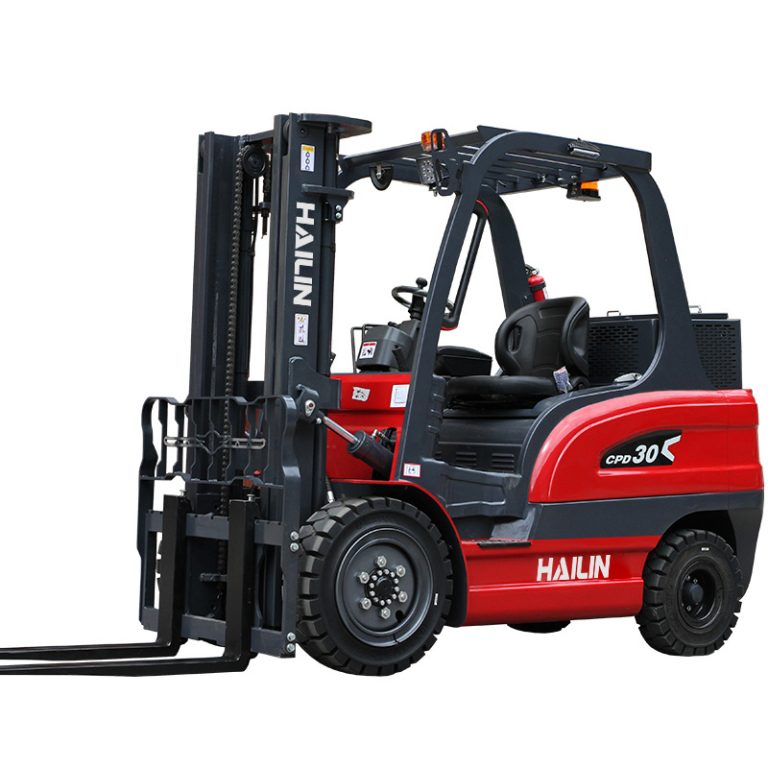
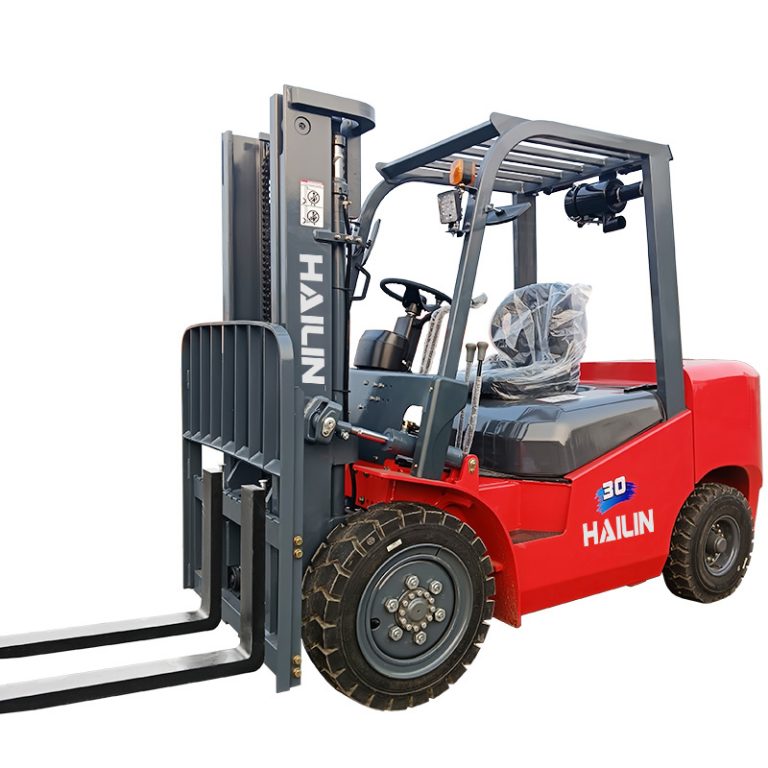
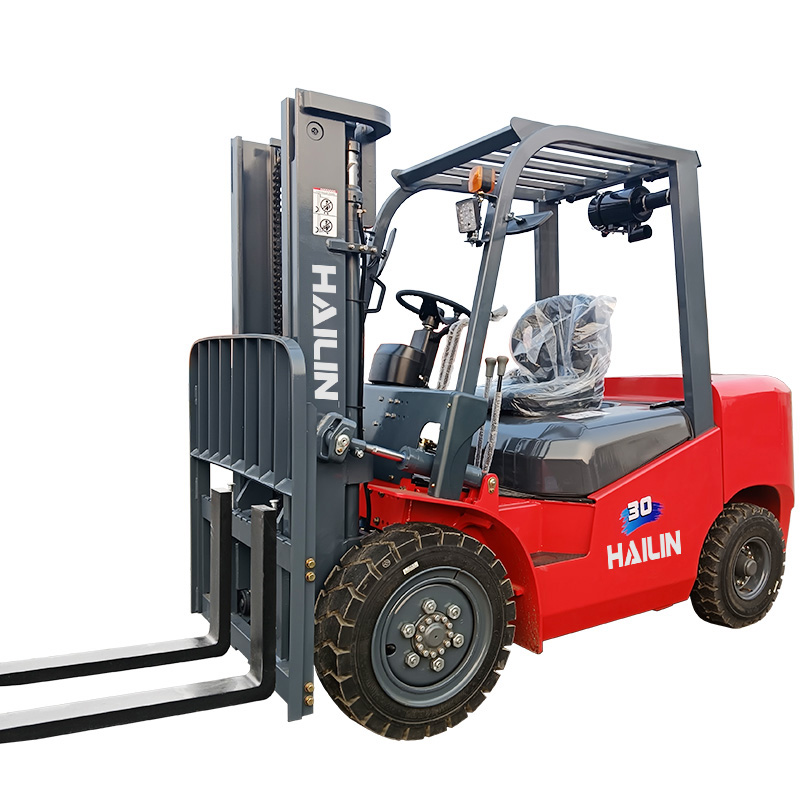
When discussing forklift fall zones and warehouse safety, equipment quality also plays an important role. A well-designed forklift can help operators maintain better visibility, smoother load handling, and improved stability during daily operations. This is one reason many warehouses and industrial facilities choose reliable brands like Hailin Forklift for material handling tasks.
Hailin Forklift focuses on producing forklifts and warehouse equipment designed for efficiency, operator comfort, and workplace safety. Features such as ergonomic controls, stable mast systems, responsive braking, and clear operator visibility can help reduce the risks associated with forklift fall zones. In busy warehouses where pedestrians and forklifts work close together, these design improvements contribute to safer movement and better operational control.
Modern forklift safety is not only about operator skill. Equipment technology also matters. Many advanced forklifts now include:
- LED warning lights
- Rear-view cameras
- Stability control systems
- Anti-slip steps
- Enhanced mast visibility
- Ergonomic seating and controls
These features help operators react faster and maintain better awareness of their surroundings. For example, improved visibility can reduce blind-spot accidents, while stable load handling systems lower the chances of pallets shifting or falling during transport.
Companies that invest in quality forklifts often experience additional long-term benefits beyond safety. Reliable equipment can reduce maintenance downtime, improve productivity, and support OSHA-compliant warehouse operations. In high-traffic environments, choosing the right forklift brand becomes part of the overall safety strategy rather than simply a purchasing decision.
For warehouses handling heavy pallets, high stacking operations, or fast-paced logistics workflows, combining proper forklift training with dependable equipment like Hailin Forklift can significantly improve both operational efficiency and workplace safety.
Forklift Operator Training
Even the best equipment cannot replace skilled operators. Comprehensive forklift training teaches operators how to manage loads, maintain stability, recognize hazards, and protect nearby workers.
Training should include:
- Load capacity awareness
- Stability triangle principles
- Pedestrian communication
- Blind spot management
- Emergency procedures
- Safe travel speeds
Facilities that treat training as a one-time formality usually struggle with recurring safety problems. Continuous refresher training creates stronger long-term habits.
Why Fall Zone Awareness Improves Productivity and Compliance
Some managers mistakenly view forklift safety measures as obstacles to productivity. In reality, the opposite is true. Accidents create downtime, equipment damage, lawsuits, investigations, and worker shortages. A single serious forklift incident can halt operations for hours or days.
Safe facilities operate more smoothly because employees trust the environment around them. Clear traffic systems reduce confusion. Organized workflows improve efficiency. Fewer accidents mean fewer disruptions.
There’s also a financial dimension. OSHA violations related to forklift safety can become expensive quickly, especially when employers ignore known hazards. Insurance costs may rise after incidents, and customer confidence can suffer if safety problems become public knowledge.
Strong fall zone awareness ultimately creates a more professional operation. It demonstrates that a company values both efficiency and human life equally.
The fall zone for a forklift operation is far more than the area directly beneath raised forks. It is the constantly changing danger zone where workers may be struck by falling materials, unstable loads, swinging forklift movement, or overturn accidents. Understanding this concept is essential for every warehouse employee, not just forklift operators.
Forklift safety depends on separation, awareness, training, and smart workplace design. Elevated loads create gravity hazards. Tight turns create tip-over risks. Blind spots create pedestrian dangers. Each factor expands the invisible boundary surrounding the machine.
The safest facilities treat the forklift fall zone as a living safety system rather than a simple rule. They combine operator training, pedestrian education, traffic management, warning technology, and OSHA compliance into one coordinated strategy. That approach not only prevents injuries but also improves operational efficiency and long-term business stability.
In fast-moving industrial environments, the difference between a normal workday and a life-changing accident often comes down to one simple decision: respecting the fall zone.
FAQs
1. What is considered the fall zone of a forklift?
The forklift fall zone is the hazardous area around a forklift where workers could be injured by falling loads, shifting materials, or forklift tip-overs during operation.
2. Does OSHA define an exact forklift fall zone distance?
No. OSHA does not provide one universal distance because safe separation depends on factors like load height, workplace layout, and operating conditions.
3. Why should workers never stand under raised forks?
Raised loads can fall unexpectedly due to pallet failure, load shifts, hydraulic issues, or operator error. OSHA specifically prohibits standing beneath elevated loads.
4. What causes forklifts to tip over?
Common causes include overloading, excessive speed, sharp turns, uneven surfaces, elevated loads, and improper braking techniques.
5. How can companies reduce forklift fall zone accidents?
Companies can reduce accidents by separating pedestrian traffic, improving operator training, using warning systems, enforcing OSHA rules, and implementing proper warehouse traffic management systems.